Electrical Safety Certificates for Landlords: EICR Requirements Explained
Everything private landlords in England need to know about Electrical Installation Condition Reports (EICRs) — the 5-year inspection cycle, testing process, and non-compliance penalties.
Do I need an electrical safety certificate (EICR) for my rental properties, and how often should it be tested? Yes — every private landlord in England has needed a valid Electrical Installation Condition Report since 1 July 2020, and it must be tested at least every five years, or sooner if your electrician recommends it. Non-compliance can mean a civil penalty of up to £30,000 per property, and an expired or missing report can block your possession claim or trigger a rent repayment order.
This article was written by the LandlordReady Compliance Team, specialists in UK private rental sector regulations including the Renters' Rights Act 2025, Awaab's Law, and electrical safety standards. LandlordReady helps landlords track and meet their legal compliance obligations.
Published: 15 March 2026
Do I Need an Electrical Safety Certificate (EICR) for My Rental Properties, and How Often Should It Be Tested?
Yes. Since 1 July 2020, private landlords in England must obtain a valid EICR for every assured shorthold tenancy before it begins, under the Electrical Safety Standards in the Private Rented Sector (England) Regulations 2020, and must renew it at intervals of no more than five years from the date of the last satisfactory report. Every landlord we speak to who's been through a renewal knows the drill: book early, because electricians get booked solid every spring as five-year certificates from the 2020/2021 launch wave come due.
How often must I renew it? The five-year cycle is a maximum, not a target — if your electrician recommends a shorter interval because of the age or condition of the wiring, you must follow their advice rather than waiting the full five years.
2026 renewal wave. If you obtained your first EICR in 2020 or 2021 when the regulations came into force, your certificate is now expiring or has already expired. Many landlords are facing their first renewal cycle this year — do not leave it until the last moment, as electricians are heavily booked during peak renewal periods.
Why Electrical Safety Matters for Landlords
Faulty electrical installations are one of the leading preventable causes of rental property fires in England. According to the Home Office Fire and Rescue Incident Statistics, electrical distribution faults account for approximately 35% of accidental domestic fires in England annually (latest data 2024) — see the gov.uk fire statistics data tables for the full breakdown by cause. This makes electrical faults one of the leading preventable causes of rental property fires, which is why the government made periodic testing mandatory rather than leaving it to landlord discretion. As a private landlord, you have a legal duty to ensure the electrical systems in your rental property are safe — and to prove it with a valid Electrical Installation Condition Report (EICR).
This obligation is not optional and applies to every assured shorthold tenancy in England. Our guide to what landlords need to know about the Renters' Rights Act 2025 makes clear that safety standards, including electrical compliance, will be scrutinised more closely than ever, with non-compliance capable of undermining a landlord's ability to regain possession.
1 July 2020An EICR is not a one-off formality — it is a rolling obligation that must be maintained for as long as you let the property.
What Is an EICR?
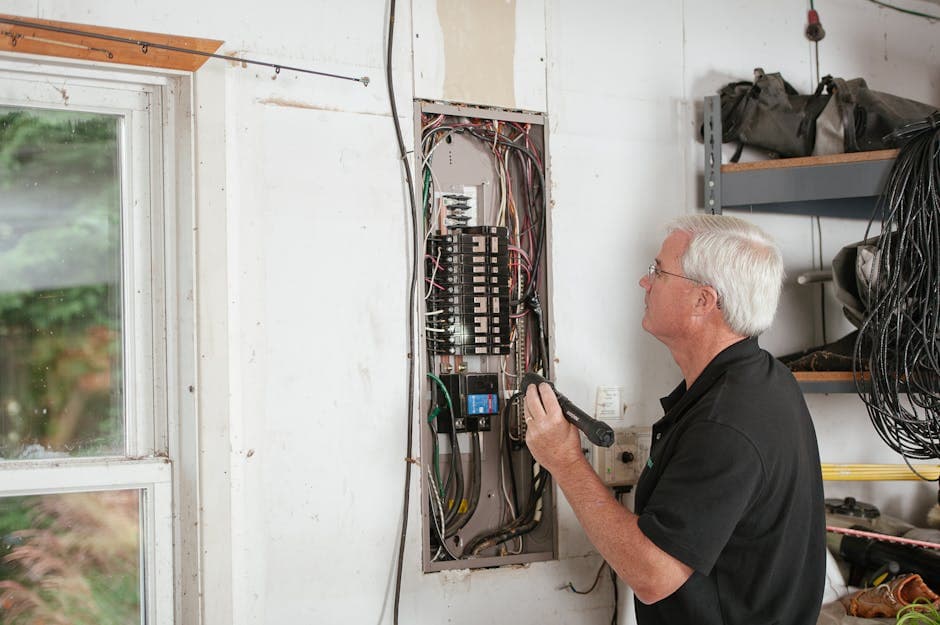
An EICR is a formal safety report on the fixed electrical wiring in your property, produced by a qualified electrician. It records the condition of the fixed electrical installation in your property — the wiring, consumer unit (fuse box), sockets, light fittings, and any other permanently connected equipment.
The report grades any issues found using a coding system:
- C1 — Danger present. An immediate risk to anyone using the installation. Requires urgent remedial action.
- C2 — Potentially dangerous. A serious deficiency that could become dangerous. Requires urgent remedial action.
- FI — Further investigation required. The electrician could not fully assess part of the installation and needs to investigate further.
- C3 — Improvement recommended. Not a deficiency as such, but an area where the installation does not meet current standards and could be improved.
The 5-Year Inspection Cycle
Five years is the statutory maximum interval between inspections, timed from the date of the last satisfactory report, not from the tenancy start date. The National Inspection Council for Electrical Installation Contracting (NICEIC) notes that electrical installations deteriorate over time, and a 5-year inspection cycle ensures defects are caught before they pose a fire risk. For example, a landlord in Manchester with a 3-bed terrace who obtained a satisfactory EICR in June 2021 must have the next inspection completed no later than June 2026 — waiting until a tenant complains, or until renewal season is fully booked, risks a compliance gap. Landlords who book their electrician the moment the previous report turns four years old, rather than waiting for the five-year deadline to loom, consistently avoid this scramble.
Key Obligations
Landlords in England have the following legal obligations regarding EICR inspections:
- Obtain an EICR before a new tenant moves in, unless a valid report is already in place
- Ensure inspections are carried out at least every five years thereafter
- Provide a copy of the most recent report to new tenants before they occupy the property
- Provide a copy to existing tenants within 28 days of receiving it
- Supply a copy to your local authority within seven days if requested
These obligations form part of the broader safety standards that private landlords must meet. A valid EICR is one of the pieces of evidence you'll need to demonstrate compliance with the Decent Homes Standard for private landlords in England, which sets minimum requirements for rental property condition, including freedom from electrical hazards. Category 1 electrical hazards under the Housing Health and Safety Rating System are exactly the kind of defect a satisfactory EICR is designed to rule out.
Get landlord compliance updates
Stay on top of regulation changes that affect your properties.
Who Can Carry Out an EICR?
Only a qualified, competent electrician registered with a government-approved scheme can legally issue an EICR. In practice, this means they should be registered with a government-approved scheme such as:
- NICEIC (National Inspection Council for Electrical Installation Contracting)
- NAPIT (National Association of Professional Inspectors and Testers)
- ELECSA
- Stroma Certification
Always check the electrician's credentials before booking an inspection. A registered electrician will carry a valid photo ID card and be listed on their scheme provider's public register.
What Happens During an EICR Inspection?
An EICR inspection combines visual checks with dead and live electrical testing, and typically takes 3-5 hours for a standard 2-3 bedroom property, though larger properties or those with complex installations will take longer. The electrician will:
- Visual inspection. Check for obvious defects, damage, or non-compliant work.
- Dead testing. Test the circuit with the power off, checking continuity, insulation resistance, and polarity.
- Live testing. Test with the power on, checking earth fault loop impedance, RCD (residual current device) operation, and voltage.
- Document findings. Record all observations and assign defect codes where necessary.
The electrician will then issue the EICR, which will state whether the installation is satisfactory or unsatisfactory. If unsatisfactory, it will list the remedial work required and the timeframe for completion (usually 28 days unless a shorter period is specified).
Common Defects Found During EICRs
Outdated consumer units and missing RCD protection are by far the most common EICR defects in older rental properties. The most frequently identified defects in rental property EICRs include:
- Outdated consumer units. Older fuse boxes with rewireable fuses rather than modern RCD-protected consumer units.
- Missing or faulty RCDs. Properties without adequate residual current device protection, particularly on socket circuits.
- DIY electrical work. Unsound alterations or extensions carried out by unqualified persons.
- Insufficient earthing. Lack of proper earth bonding to gas and water pipes.
- Overloaded circuits. Circuits carrying more load than they were designed for, often due to spur additions.
- Damaged cables or accessories. Cracked sockets, exposed wiring, or cables with damaged insulation.
What If My Property Fails an EICR?
An unsatisfactory EICR means you cannot legally let the property until the C1, C2, or FI defects are fixed. If your EICR is unsatisfactory, you must:
- Carry out remedial work within 28 days (or sooner if specified by the electrician).
- Obtain a new EICR or a certification of remedial work from the electrician who performed the repairs.
- Provide the updated certificate to your tenant within 28 days of receiving it.
You cannot legally let the property until all C1, C2, and FI defects have been resolved. If a tenant is already in situ, you must carry out the work urgently — but you cannot force the tenant to vacate while repairs are completed unless you have grounds under one of the Section 8 grounds for possession under the Renters' Rights Act 2025, which sets out the full list of mandatory and discretionary grounds landlords can rely on (for example, if the property is genuinely uninhabitable).
Penalties for Non-Compliance
Local authorities can fine landlords up to £30,000 per property for breaching the Electrical Safety Standards Regulations, with the amount scaled to the severity of the breach. The penalty scale is set out in statutory guidance and depends on the severity and duration of the breach:
- Minor breach (first offence, short duration, no harm caused): £1,000–£5,000
- Moderate breach (repeated failures, longer duration): £5,000–£15,000
- Serious breach (prolonged non-compliance, evidence of harm or risk): £15,000–£30,000
Penalties are in addition to any costs you incur for emergency remedial work or legal fees. They can also appear on publicly accessible registers of rogue landlords.
How Much Does an EICR Cost?
A standard EICR costs between £150 and £500 depending on property size, location, and the complexity of the installation. As of mid-2026, typical prices are:
- 1-2 bedroom flat: £150–£250
- 3 bedroom house: £200–£350
- 4+ bedroom house or complex installation: £300–£500+
Remedial work is charged separately. Simple fixes (replacing a damaged socket, tightening connections) may cost £50–£150. More extensive work (consumer unit replacement, rewiring a circuit) can run £300–£1,500 depending on scope.
Budget for both the inspection and potential remedial work — assume £500–£800 total for a standard property if minor defects are found.
Keeping Records
You must keep every EICR on file for the duration of the tenancy plus at least two years after it ends, ready to produce within seven days if your local authority asks. Your local authority can request to see them at any time, and you must provide a copy within seven days of a request.
LandlordReady automatically tracks your EICR expiry dates and sends reminders 60 days before renewal is due, so you never miss the five-year deadline.
Frequently asked questions
Summary
Electrical safety is a non-negotiable legal obligation for private landlords in England. The five-year EICR cycle ensures your property's electrical installation remains safe and compliant, protecting both your tenants and your investment. Non-compliance exposes you to penalties of up to £30,000, potential Rent Repayment Orders under the Renters' Rights Act, and reputational damage.
To stay compliant:
- Obtain an EICR before each new tenancy (or ensure a valid one is in place)
- Renew every five years maximum
- Use a qualified, registered electrician
- Fix all C1, C2, and FI defects within 28 days
- Provide copies to tenants and retain records for audit
LandlordReady tracks your EICR deadlines alongside all other compliance obligations, so you can focus on running your property rather than chasing certificates. If you need tailored advice on your specific installation or remedial work scope, consult a qualified electrician or solicitor.
LandlordReady Team
Compliance Experts
The LandlordReady team includes qualified property professionals, housing law specialists, and experienced private landlords. Our compliance guides are researched against current legislation, official government guidance, and regulatory body publications to help every private landlord in England stay compliant with confidence.
Stay on top of your obligations
LandlordReady tracks deadlines, certificates, and regulatory changes for you.
Start your free trialCancel anytime.
Stay informed
Compliance updates in your inbox. No spam.
Related articles
Found this useful? Share it with a fellow landlord.