Storing Tenancy Documents Securely: What Every Landlord Must Keep and How
Private landlords must store tenancy documents securely and know how long to keep them. This guide covers every document you need, legal retention periods, GDPR obligations, and the best ways to organise and protect your records.
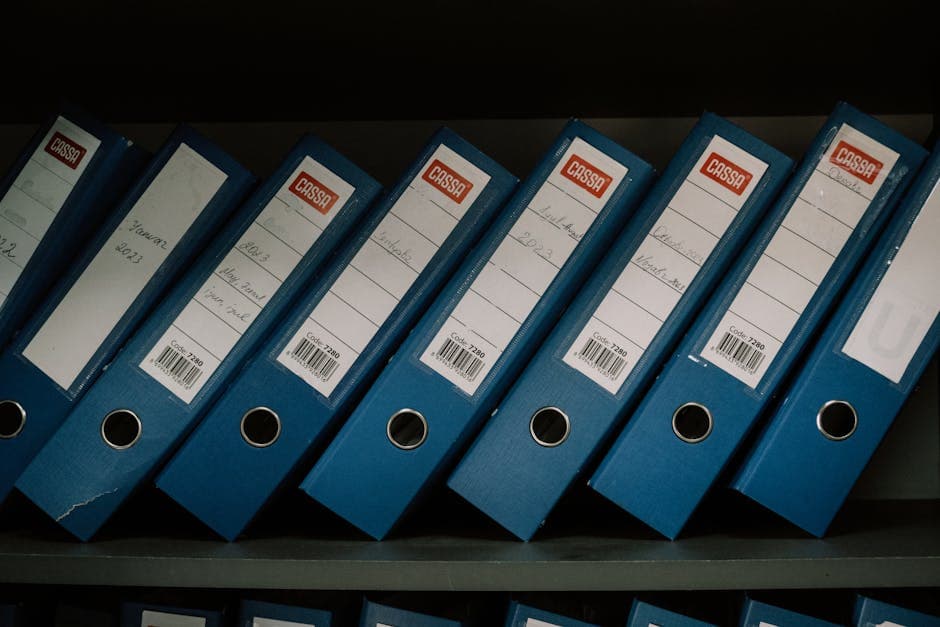
Why Storing Tenancy Documents Securely Should Be a Priority
TL;DR: Private landlords should keep core tenancy documents — including gas safety certificates, EICRs, EPCs, tenancy agreements, deposit certificates, right-to-rent checks, and correspondence — for at least six years after a tenancy ends, because the Limitation Act 1980 allows most claims to be brought for six years. Secure storage is both a legal obligation under UK GDPR (you are a data controller when holding tenant personal data) and essential evidence in deposit disputes, tax enquiries, and council inspections. The new Property Portal will ask landlords to upload their gas, electrical and energy certificates when registering, which opens region by region from 15 December 2026. Landlords who organise documents now — ideally using cloud storage with consistent naming conventions and expiry tracking — will find registration straightforward and avoid enforcement action for missing records.
Over the course of even a single tenancy, private landlords accumulate a surprising volume of paperwork. A typical two-year tenancy generates at least two gas safety certificates, one electrical installation condition report, an EPC, a signed tenancy agreement, deposit protection certificates, an inventory, right-to-rent check copies, insurance policy documents, and dozens of emails about repairs and rent payments. If you manage one or two properties, it is tempting to let these pile up in a drawer or scatter across email attachments. But storing tenancy documents securely is not just good practice — it is a legal obligation that protects you in disputes, satisfies HMRC, and meets your data protection duties.
The stakes are rising. The Property Portal (PRS Database) will require landlords to provide compliance documents when registering their properties. Registration opens on 15 December 2026, starting with the West Midlands, and every landlord actively letting must be registered by 14 November 2027 (GOV.UK). Landlords who cannot produce a valid gas safety certificate or EICR on demand risk enforcement action, including financial penalties and banning orders in serious cases. If you cannot produce a document when it matters — in a deposit dispute, a council inspection, or a tax enquiry — it is as if the document never existed. Getting your landlord document storage right now means you are ready for whatever the regulator asks of you next.
Private landlords must retain tenancy documents for specific legal periods (typically six years) to defend deposit disputes, satisfy tax authorities, and comply with Property Portal registration requirements.
What Documents Must Landlords Keep?
Private landlords in England must hold a defined set of compliance, contractual, and financial documents for each property they let. Missing even one category — such as right-to-rent check records or a signed tenancy agreement — can undermine your legal position in disputes or trigger fines during a council inspection. Good landlord record keeping starts with knowing exactly which documents you need to hold. Here is the comprehensive list for a private residential landlord in England.
Safety and Compliance Certificates
- Gas Safety Certificate (CP12) — Your annual gas safety record, issued by a Gas Safe registered engineer. You must give a copy to your tenant within 28 days of the check and before any new tenant moves in.
- Electrical Installation Condition Report (EICR) — The five-yearly electrical safety inspection required under the Electrical Safety Standards in the Private Rented Sector (England) Regulations 2020.
- Energy Performance Certificate (EPC) — A valid EPC is required whenever a property is let. Certificates last ten years, but keep previous ones too if you have upgraded the property's rating.
Tenancy and Deposit Records
- Tenancy agreement (signed copy) — The foundation document of your landlord-tenant relationship. Keep the original signed version, including any addendums or variations agreed during the tenancy.
- Deposit protection certificate and prescribed information — Proof that the tenant's deposit is protected in an approved scheme and that you served the required prescribed information within 30 days.
- Section 13 rent increase notices — If you have increased rent during a periodic tenancy, keep copies of every notice served.
Identity and Licensing
- Right-to-rent check copies — Records of the immigration checks you carried out before granting the tenancy. The Home Office specifies exactly how long these must be retained.
- Licence documents — If your property requires an HMO licence or falls within a selective licensing scheme, keep the licence itself and all application correspondence.
Property Condition and Insurance
- Inventory and schedule of condition — Dated and ideally signed by the tenant at check-in. This is your primary evidence in any deposit dispute.
- Landlord insurance policy — Your buildings insurance, landlord liability cover, and any rent guarantee or legal expenses policy.
Correspondence and Financial Records
- Correspondence with tenants — Repair requests, complaints, notices served (Section 8, Section 21, or under the Renters' Rights Act), and your responses. Keep emails, letters, and a log of phone conversations.
- Tax records — Rental income, allowable expenses, and receipts. HMRC requires you to keep these for a set period, as outlined in our landlord tax guide.
Legal Retention Periods: How Long Must You Keep Each Document?
Different tenancy documents have different legal and practical retention periods set by statute, HMRC policy, and the common-law limitation period for civil claims. The Limitation Act 1980 sets a six-year window for most contractual and negligence claims in England, meaning a former tenant could bring a claim up to six years after the tenancy ends. Landlords who discard records prematurely face severe disadvantages if a dispute arises years later — for example, a tenant alleging unlawful deduction from deposit or failure to carry out repairs. Tenancy document retention is not one-size-fits-all. The following table summarises the minimums you should follow.
| Document | Minimum retention period |
|---|---|
| Gas Safety Certificate (CP12) | Current certificate, plus ideally the previous 2 years |
| EICR | 5 years (the certificate's validity period) |
| EPC | 10 years (the certificate's validity period) |
| Tenancy agreement | Duration of tenancy + 6 years (Limitation Act 1980) |
| Deposit prescribed information | Duration of tenancy + 6 years |
| Right-to-rent check records | Duration of tenancy + 1 year (Home Office requirement) |
| Correspondence and repair logs | Duration of tenancy + 6 years |
| Tax records (income and expenses) | Current tax year + 5 previous complete tax years (HMRC) |
| Inventory / schedule of condition | Duration of tenancy + 6 years |
| Insurance policies | Duration of the policy + 6 years |
The six-year figure comes from the Limitation Act 1980, which sets the time limit for most civil claims in England. If you no longer have the relevant paperwork, defending yourself becomes significantly harder.
Get landlord compliance updates
Stay on top of regulation changes that affect your properties.
GDPR: Your Obligations as a Data Controller
Private landlords who hold tenant personal data — names, contact details, copies of passports or visas, bank account details, or right-to-rent check documents — are data controllers under the UK General Data Protection Regulation (UK GDPR). This classification applies even to small-scale landlords with one or two properties. Many landlords do not realise it, but if you hold personal data about your tenants, you are a data controller and must comply with GDPR obligations.
This means you must:
- Have a lawful basis for processing personal data. For most landlord purposes, this will be either contractual necessity or legitimate interests.
- Store personal data securely — whether digitally (password-protected, encrypted) or physically (locked filing cabinet, restricted access).
- Only keep what is necessary. Do not retain data you no longer need. Once the retention period for a document has passed and there is no outstanding dispute, you should securely delete or destroy it.
- Respond to subject access requests. A tenant (or former tenant) can ask to see what personal data you hold about them, and you must respond within one calendar month.
Storing tenancy documents securely is therefore not only about protecting yourself — it is about meeting your legal duties to the people whose data you hold.
Cloud Storage vs Physical Filing
Landlords have two broad options for document storage: digital cloud-based systems or physical paper filing in folders and cabinets. Cloud storage offers accessibility from any location (essential when a council inspector requests a gas certificate on-site), automatic backups that protect against hardware failure or fire, full-text search that finds specific documents in seconds, and easy sharing with tenants, accountants, or solicitors. Physical filing incurs no ongoing subscription cost but is vulnerable to loss, damage, theft, and fire — a single incident can destroy years of irreplaceable records. When it comes to landlord document storage, each approach has advantages.
Cloud / Digital Storage
- Accessible from anywhere — essential if you need to produce a document at short notice, such as during a council inspection or when communicating with your letting agent.
- Automatic backups — reputable cloud services replicate your data, so a hardware failure does not mean lost records.
- Searchable — finding a specific document takes seconds rather than minutes of rifling through folders.
- Easily shareable — you can send a copy to your tenant, accountant, or solicitor without leaving your desk.
Physical Filing
- No ongoing subscription cost — though the real cost is your time and the risk of loss.
- Some documents have legal weight as originals — particularly signed tenancy agreements, though digital signatures are equally valid in most contexts.
- Vulnerable to loss, damage, and fire — a single incident can destroy years of records with no way to recover them.
The Recommended Approach
Use digital storage as your primary system. Scan or photograph every paper document as soon as you receive it and file it immediately. Keep physical originals only where there is a specific reason to do so — for example, a wet-signed tenancy agreement. Store those originals in a fireproof, lockable cabinet.
A document you cannot find when you need it is a document you do not have. Digital-first storage, properly organised, solves that problem.
Organising Your Documents Effectively
Landlords who adopt a consistent filing system can locate any document in under 30 seconds, while those who rely on ad-hoc folders or email search spend hours hunting for a single certificate when a tenant dispute or tax enquiry arises. Having documents is one thing. Being able to find them quickly is another. A consistent system makes all the difference.
Structure by Property, Then by Type
If you own more than one property, create a top-level folder for each address. Within each property folder, use subfolders for each document category:
- Safety certificates (gas, electrical, EPC)
- Tenancy agreements and deposit information
- Right-to-rent checks
- Inventories and condition reports
- Correspondence
- Insurance
- Financial records
Name Files Consistently
Adopt a naming convention and stick to it. A good format is:
[Address][Document-Type][Date].pdf
For example: 12-Oak-Road_Gas-Safety_2026-03.pdf or 12-Oak-Road_Tenancy-Agreement_2025-09.pdf
This approach means files sort chronologically within each folder, and you can tell at a glance what a document is without opening it.
Set Calendar Reminders for Renewals
Every document with an expiry date should trigger a calendar reminder well before it lapses. For gas safety certificates, set a reminder at least six weeks before the anniversary. For EICRs, remind yourself three months ahead. Missing a renewal deadline is a breach from the day the certificate lapses, and it can lead to a council penalty or, for gas, prosecution by the Health and Safety Executive.
What the Property Portal Will Require
Under the Renters' Rights Act, all private landlords in England will need to register on the Property Portal and provide evidence of compliance with key obligations. Registration opens region by region from 15 December 2026. The government's Housing Hub guidance says you will be asked for a copy of the gas safety record (if one exists), the EICR or equivalent electrical certificate, and the EPC, along with details of the property, the tenancy and the rent.
Landlords who already have their documents organised digitally will find registration straightforward. Those who need to hunt through drawers and email inboxes will find it considerably more stressful. Getting your tenancy document retention system in order now is the single most useful thing you can do to prepare.
How LandlordReady Helps
LandlordReady includes secure document storage organised by property, with built-in expiry tracking that alerts you before certificates lapse. Every document is stored securely, backed up automatically, and accessible whenever you need it — whether that is for a deposit dispute, a tax return, or registering on the Property Portal.
If storing tenancy documents securely has always felt like something you will get around to eventually, there is no better time to start than now. A well-organised system takes an afternoon to set up and saves you hours of stress down the line.
LandlordReady Team
Editorial team
LandlordReady's guides are written for landlords who manage their own properties. They are researched from primary sources (legislation.gov.uk, GOV.UK guidance and the HSE), and each guide shows when it was last reviewed. They are general information, not legal advice.
Stay on top of your obligations
LandlordReady tracks deadlines, certificates, and regulatory changes for you.
Start your free trialCancel anytime.
Stay informed
Compliance updates in your inbox. No spam.
Related articles
Found this useful? Share it with a fellow landlord.